In the pursuit of optimal health and performance, the most critical organ system is one that few people adequately track: the gut microbiome. Often referred to as the “second brain,” the 100 trillion microbes living in your large intestine influence everything from mood and immunity to metabolism and even the storage of visceral fat.
For the data-driven health enthusiast, “gut feeling” is no longer enough. We require a measurable, actionable Microbiome Diet Protocol.
The foundation of a healthy gut is simple: feed the beneficial bacteria (Prebiotics) and introduce new beneficial strains (Probiotics). However, the execution is incredibly complex. Traditional diet apps, focused purely on calories and basic macros, are entirely blind to the nuanced metrics required for microbial health—specifically, Fiber Diversity for Gut Health.
Limotein is the next-generation solution built for this level of detail. By utilizing advanced AI to track the specific types of fermentable fibers and the quality of Fermented Foods Logging, Limotein ensures you are achieving the sufficient intake and Fiber Diversity essential for a truly flourishing gut ecosystem.
1. The Core Duality: Prebiotics vs. Probiotics
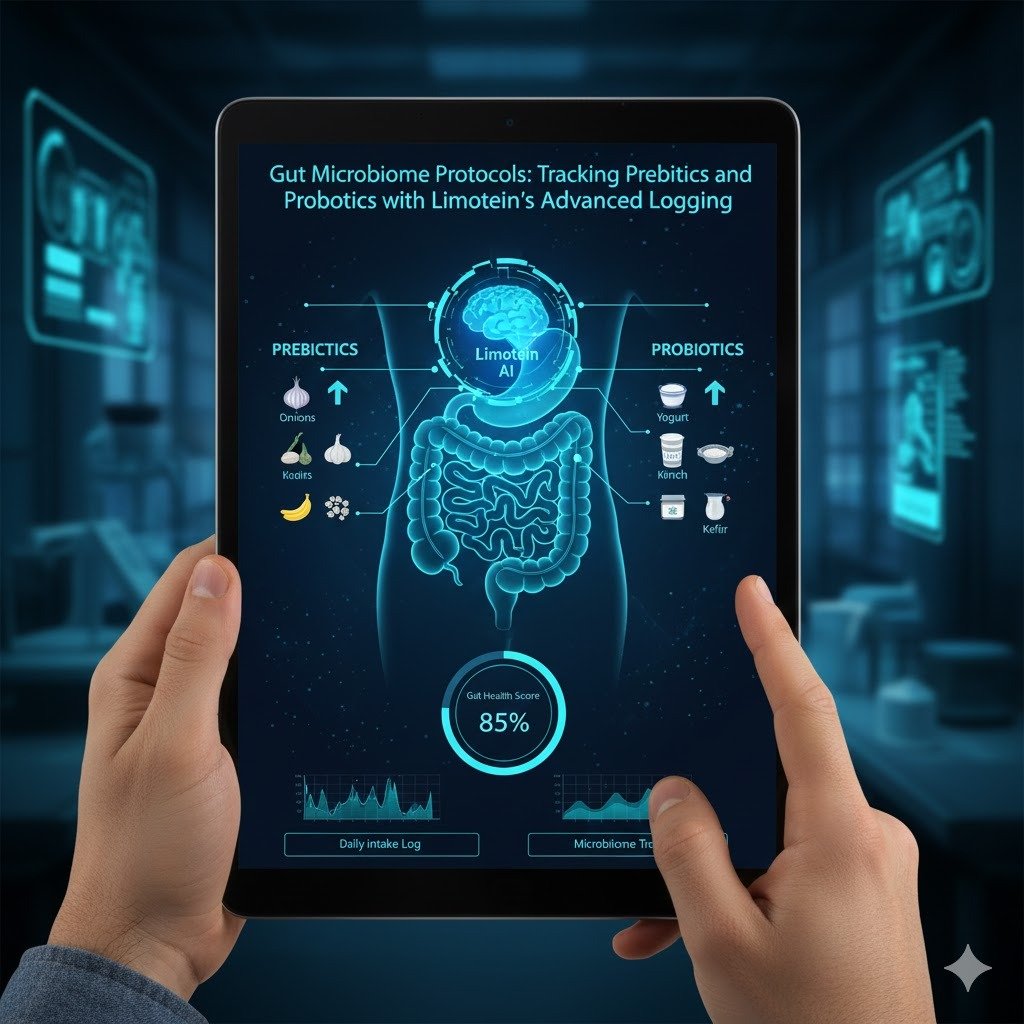
To implement an effective Microbiome Diet Protocol, we must distinguish between the two key players in gut health.
A. Probiotics (The Residents)
-
What they are: Live microorganisms (bacteria and yeast) that, when consumed in adequate amounts, confer a health benefit on the host. They are temporary “immigrants” that help stabilize the environment.
-
Sources: Fermented foods like yogurt, kefir, sauerkraut, kimchi, and tempeh.
B. Prebiotics (The Fuel)
-
What they are: Non-digestible components of food (specific types of fiber and starches) that pass through the small intestine undigested and selectively feed beneficial bacteria in the large intestine.
-
Sources: Specific fibers found in foods like onion, garlic, leeks, bananas, asparagus, and oats.
The Limotein Insight: Diversity is King
The goal is not just how much fiber, but how many different types of fermentable fibers you consume. A diverse gut bacteria population is the hallmark of health, and diversity is fostered by a wide variety of prebiotic food sources. Limotein is engineered to track this crucial variable.
Key Takeaway: If you only track total grams of fiber, you miss the crucial metric of Fiber Diversity. This diversity is what dictates the robustness and resilience of your microbiome.
2. The Failure of Traditional Logging in Gut Health
Why do older, manual calorie counters completely miss the mark on a Microbiome Diet Protocol?
The “Total Fiber” Trap
Traditional apps generally only display “Total Fiber.” They cannot distinguish between non-fermentable fiber (which aids bulk) and fermentable prebiotic fiber (which feeds the bacteria). Two users might both hit 30g of fiber, but if one user gets it from high-prebiotic sources and the other from non-fermentable sources, their gut health outcomes will be vastly different.
The Lack of “Quality” Metrics
Tracking Fermented Foods Logging is complicated. A manual logger might type “Yogurt,” but traditional databases do not verify if it contains live active cultures or if it is loaded with sugar (which feeds pathogenic bacteria). The Diet Quality Score (DQS) is necessary to assess the real impact of these foods.
The Expense of Guesswork
Many users resort to expensive, generic probiotic supplements because they don’t know if their diet is sufficient. Limotein’s precision tracking eliminates this guesswork by showing you exactly where your dietary intake is lacking.
3. Limotein: The AI Solution for Gut Precision
Limotein is built for the precision required by the Microbiome Diet Protocol. It provides unparalleled accuracy and deep metabolic insights, extending its analysis into the gut ecosystem.
A. Advanced Prebiotic Fiber Tracking
Limotein’s AI-Powered Food Logging (Computer Vision) identifies specific food items (e.g., asparagus, Jerusalem artichokes) and uses verified nutritional databases to track specific fermentable fiber types.
 Also Read:
Tackling Visceral Fat: The AI-Driven Nutrition Plan to Ta...
Also Read:
Tackling Visceral Fat: The AI-Driven Nutrition Plan to Ta...
-
The Diversity Index: The app compiles a Fiber Diversity Score—a proprietary metric that rewards you for consuming a wide variety of prebiotic sources, not just large quantities of one type. This directly supports the growth of diverse microbial strains.
B. Quality-Checked Probiotic & Fermented Foods Logging
When logging fermented foods, the Diet Quality Score (DQS) is immediately applied.
-
Screening for Harm: The DQS analyzes the food for Micronutrient Density and, critically, anti-inflammatory properties. It flags highly processed or high-sugar yogurts as poor quality, even if they contain some probiotics.
-
Rewarding Synergy: It rewards traditionally made, low-sugar fermented foods like kimchi or kefir, which offer both probiotics and anti-inflammatory properties.
C. Predictive Metabolic Insights & Anti-Inflammation
A healthy gut is essential for reducing chronic inflammation throughout the body. Limotein’s Predictive Metabolic Insights are crucial here.
-
Gut-Brain Axis: The AI tracks your intake of nutrients like Omega-3s and Magnesium (micronutrient density) alongside your fiber intake. A robust diet quality score is a leading indicator of a calm, less inflammatory gut environment.
-
Warning System: If your intake of fermentable fiber drops, the AI can predict a drop in SCFA production and an increase in potential gut-related issues, suggesting proactive interventions.
Key Takeaway: Limotein helps you think of food not just as fuel for you, but as fuel for your microbes. Our advanced logging ensures both quantity and, more importantly, diversity.
4. Microbiome Protocol in Action: Steps for the Data-Driven User
Use Limotein to move from generic “eat more fiber” advice to a precise, measurable Microbiome Diet Protocol.
Step 1: Log with AI Precision
Use the Limotein app to snap photos of all your meals. This ensures that the specific Prebiotic vs. Probiotic Tracking data is captured accurately. Focus on whole, unprocessed foods.
Step 2: Audit Your Fiber Diversity Score
Go beyond the total fiber number. Review the Fiber Diversity Score in your DQS summary. If the score is low, the AI will recommend specific foods to incorporate (e.g., “Add inulin from chicory root or asparagus this week to feed Bifidobacterium strains”).
Step 3: Integrate Targeted Fermented Foods
Consciously incorporate high-quality, low-sugar fermented foods. Use Limotein’s logging to ensure these items pass the DQS test (low sugar, high culture content). Track the effect on your energy levels and digestion, feeding the data back into the app for better Predictive Metabolic Insights.
Step 4: Track Anti-Inflammatory Markers
Monitor your intake of fats and antioxidants (tracked via DQS) to support the anti-inflammatory environment necessary for the gut to heal and flourish. The goal is to optimize both the gut ecosystem (probiotics/prebiotics) and its surrounding environment (low inflammation).
5. Conclusion: The Future of Internal Health
The gut microbiome is the cornerstone of metabolic and immune health. Ignoring it is no longer an option for the serious health enthusiast.
You need a tool that can see beyond calories and track the molecular complexity of your diet—specifically, ensuring adequate intake and diversity of the prebiotic fibers that fuel your beneficial bacteria. Limotein’s superior data verification and Diet Quality Score provide the accuracy edge needed to execute a successful, personalized Microbiome Diet Protocol.
Stop using simple calculators for complex biology. Start fueling your gut intelligently.
Move Beyond Guesswork: Claim Your Accuracy Edge with Limotein. Download Today and Experience the Future of Nutrition.
Download for free now