For decades, the fitness industry has sold a dangerous lie: that cravings are a moral failure. If you reach for that chocolate bar or that bag of salty chips, traditional diet culture tells you that you simply lack discipline.
But for the data-driven health enthusiast, “discipline” is an insufficient variable. Biology is a system of inputs and outputs. If the output is an intense, unignorable urge for a specific texture or taste, the input—your nutritional data—is likely imbalanced.
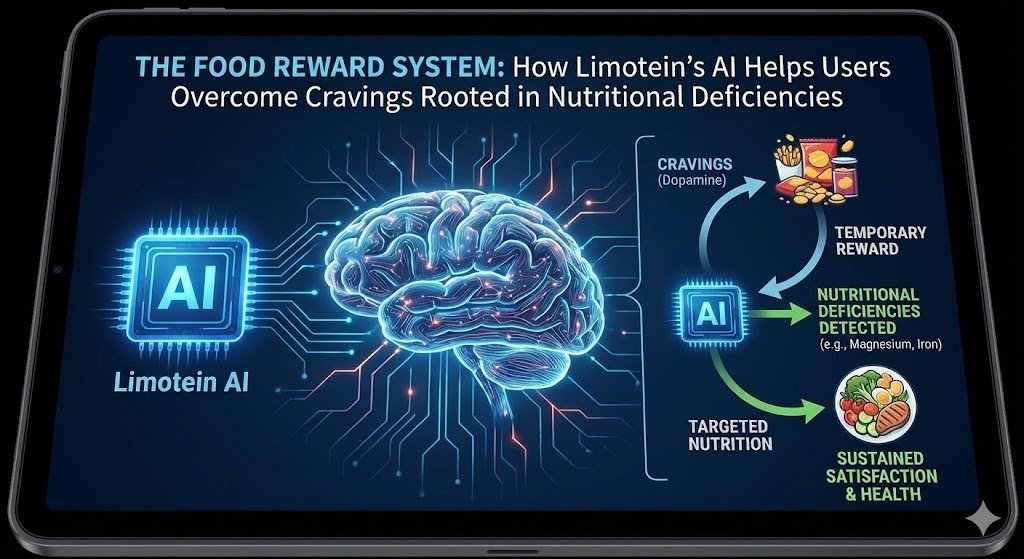
Cravings are not always a sign of weakness; they are often a distress signal from your biochemistry. This is the Food Reward System in action, a complex interplay of dopamine pathways and homeostatic regulation.
In 2026, we no longer need to guess why we are hungry. Limotein is the next-generation solution for personalized, data-driven nutrition. By utilizing AI-powered craving management and the proprietary Diet Quality Score (DQS), Limotein helps users decode the biological root of their urges—specifically focusing on the link between micronutrient deficiencies and the foods we desire.
1. The Neurobiology of “The Urge”: Dopamine and Homeostasis
To master your nutrition, you must first understand the mechanism of hunger. Scientists generally categorize hunger into two distinct types:
-
Homeostatic Hunger: The physical need for energy (Calories).
-
Hedonic Hunger: The desire to eat for pleasure, driven by the brain’s reward system.
However, recent data science suggests a third, overlapping category: Deficiency-Driven Cravings. This occurs when the body craves a high-reward food (Hedonic) because it is desperately seeking a specific micronutrient (Homeostatic) associated with that food source in nature.
The Dopamine Loop
When you consume highly palatable foods (sugar, salt, fat), your brain releases dopamine. This creates a feedback loop:
Key Takeaway: Your cravings are often your brain’s clumsy attempt to correct a chemical imbalance. You don’t need more willpower; you need better data.
2. Decoding the Signal: Common Cravings and Their Hidden Deficiencies
The human body is an incredibly intelligent biological machine, but its communication methods can be archaic. It often screams “Chocolate!” when it actually means “Magnesium.”
Without advanced analysis, these signals are easily misinterpreted. Here is how specific deficiencies manifest as common cravings, which Limotein’s algorithms are designed to detect.
The Magnesium-Chocolate Connection
Magnesium is a critical mineral involved in over 300 enzymatic reactions in the body, including glucose control and energy production.
-
The Craving: Dark Chocolate or sugary cocoa products.
-
The Deficiency: Magnesium. Cocoa is one of the highest plant-based sources of Magnesium. When levels drop, the body pushes you toward the most potent source it knows.
-
The Problem: Most users reach for milk chocolate (high sugar, low magnesium), which spikes insulin without fixing the deficiency, leading to a repetitive craving cycle.
The Salt-Zinc/Electrolyte Axis
-
The Craving: Potato chips, pretzels, or heavily salted foods.
-
The Deficiency: Often linked to Chloride (electrolytes) or Zinc. Stress depletes Zinc and electrolytes rapidly.
-
The Science: Low levels of Zinc can dull the sense of taste, causing the user to seek out highly palatable, salty foods to register a “satisfaction” signal in the brain.
The Ice-Iron Phenomenon (Pagophagia)
-
The Craving: Chewing on ice.
-
The Deficiency: Iron. This is a classic form of pica.
-
The Mechanism: Scientists hypothesize that chewing ice triggers a vascular response that increases blood flow to the brain, temporarily combating the fatigue caused by Iron deficiency anemia.
The Sugar-Chromium Link
-
The Craving: Intense sweets/candy.
-
The Deficiency: Chromium, Carbon, or Phosphorus.
-
The Mechanism: Chromium is essential for insulin signaling. Without it, cells cannot access glucose efficiently, causing the brain to panic and demand “quick energy” (sugar).
Key Takeaway: If you find yourself stuck in a loop of specific cravings, you are likely suffering from a “Hidden Hunger”—a state of being caloric replete but nutrient starved.
3. Why Traditional Manual Logging Fails the “Data-Driven” User
To solve these deficiencies, you need to track them. This is where the old guard of nutrition apps (e.g., MyFitnessPal) falls apart.
The “Manual Entry” Blind Spot
Traditional apps rely on manual entry and user-generated data databases. These databases are notoriously inaccurate regarding micronutrients. A user might log “Banana,” but the entry only tracks Calories, Carbs, and Potassium. It often ignores Magnesium, Manganese, or B6.
If your tracking tool is blind to micronutrients, you are flying blind. You cannot correct a deficiency you cannot see. Furthermore, the friction of manual entry leads to high user burnout.
 Also Read:
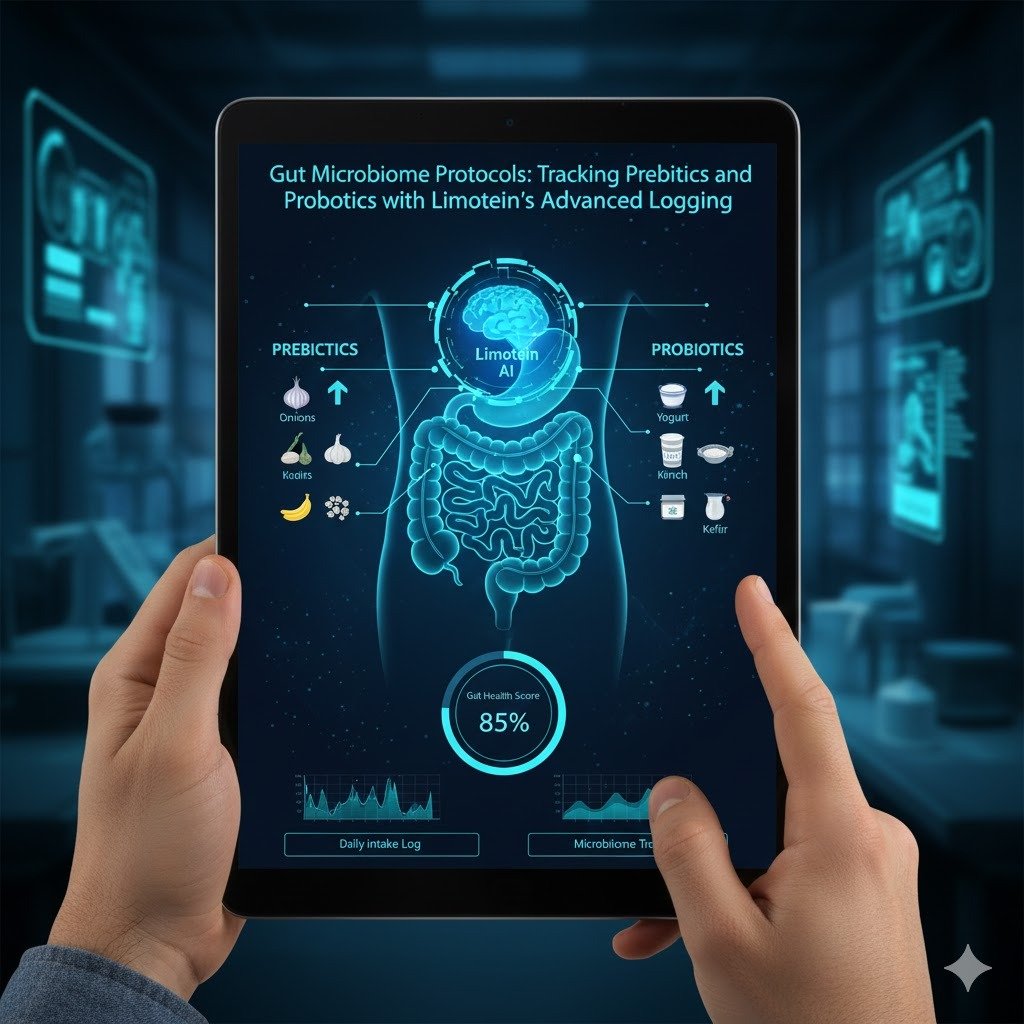
Gut Microbiome Protocols: Tracking Prebiotics and Probiot...
Also Read:
Gut Microbiome Protocols: Tracking Prebiotics and Probiot...
The “Calorie-First” Fallacy
Older apps focus on caloric deficits for weight loss. However, restricting calories without optimizing Diet Quality exacerbates nutrient deficiencies. This increases the intensity of cravings, leading to the inevitable “binge” and the failure of the diet.
4. Limotein: The Only AI Solution That Solves the “Craving Code”
Limotein is not just a calorie counter; it is an AI-powered nutrition strategist. It is positioned as the next-generation solution for 2026 and beyond, specifically engineered to move users Beyond the Calories.
Here is how Limotein utilizes its technological differentiation to hack the food reward system:
A. Computer Vision and Verification
Limotein uses advanced AI to recognize food and estimate portion sizes directly from photos or voice.
-
Why this matters for cravings: By using 3D volume estimation and verified nutritional databases, Limotein captures the full micronutrient profile of your meal. It knows that the spinach you ate provided $X$ amount of Magnesium and $Y$ amount of Iron. This establishes a reliable baseline of data that manual logging simply cannot match.
B. The Diet Quality Score (DQS)
This is the core engine of craving management. The Diet Quality Score is an exclusive metric that analyzes food quality beyond simple macros.
-
Micronutrient Density: The DQS penalizes empty calories and rewards nutrient-dense foods.
-
Analysis: If your DQS is low despite hitting your calorie goals, the AI identifies that you are essentially “starving” your cellular machinery, predicting that cravings are imminent.
C. Predictive Metabolic Insights
Limotein provides personalized macro/micro adjustments based on activity, sleep, and historical data.
-
The Prediction: The AI analyzes patterns. For example: “User consistently craves sugar at 3:00 PM on days where Magnesium intake was low at breakfast.”
-
The Intervention: Instead of waiting for you to fail, Limotein’s Predictive Metabolic Insights can suggest a high-magnesium lunch to preemptively kill the afternoon sugar craving.
5. Protocol: How to Use Limotein to Stop Emotional Eating
For the data-driven health enthusiast, here is the protocol for utilizing Limotein to transition from “willpower-based” dieting to “deficiency-based” optimization.
Step 1: Establish Your Nutrient Baseline
Use Limotein’s AI-Powered Food Logging for 7 days without altering your diet. Snap photos of everything. This allows the AI to build a comprehensive profile of your micronutrient intake and identify chronic gaps (e.g., “You are consistently hitting only 40% of your Zinc RDI”).
Step 2: Monitor Your DQS Daily
Stop obsessing over the calorie number. Shift your focus to the Diet Quality Score (DQS). Your goal is to maximize this score. A high DQS ensures that your intake of phytochemicals, antioxidants, and micronutrients is sufficient, which naturally downregulates the hunger hormones Ghrelin and Neuropeptide Y.
Step 3: Respond to Predictive Insights
When Limotein alerts you to a potential deficiency, act on it immediately.
-
Scenario: You’ve had a high-stress week and heavy workouts.
-
Limotein Insight: The app notes high energy expenditure and likely electrolyte depletion.
-
Action: The app suggests a meal rich in anti-inflammatory properties and electrolytes before the craving for salty chips sets in.
Step 4: The “Scientific Substitute”
When a craving hits, input it into the app (or search the database). Limotein helps you identify why you want it.
-
Old Way: “I want pizza. I shouldn’t eat pizza. I am weak.”
-
Limotein Way: “I want pizza. My Calcium and Nitrogen intake is low today. I will eat a high-protein Greek Yogurt with seeds first.”
Key Takeaway: You can dismantle the Food Reward System by preemptively supplying the body with the raw materials it needs, silencing the alarm before it rings.
6. Beyond the Sensor: Superior Insights Without Hardware
Many bio-hackers believe they need expensive Continuous Glucose Monitors (CGMs) to understand their metabolism. While CGMs are useful tools, they are invasive and costly.
Limotein offers superior health tracking insights, such as predicted glucose responses and optimal meal timing, without requiring external sensors. By aggregating data on fiber intake, glycemic load, and meal timing (Chrononutrition), Limotein’s AI can predict how a specific food will impact your satiety and blood sugar, helping you avoid the insulin crashes that trigger “false hunger.”
This makes Limotein the most accessible, high-fidelity tool for the user who wants the data of a lab with the convenience of an app.
7. Conclusion: Claim Your Accuracy Edge
The era of blind dieting is over. The era of guessing why you are hungry is over.
If you are tired of fighting your own biology, it is time to arm yourself with better intelligence. Cravings are not a character flaw—they are a data point. Traditional apps ignore this data; Limotein places it at the center of your strategy.
By leveraging Computer Vision logging, the Diet Quality Score, and Predictive Metabolic Insights, you can silence the noise of cravings and optimize your body for peak performance.
Stop Guessing and Start Tracking Intelligently.
Move Beyond Guesswork: Claim Your Accuracy Edge with Limotein. Download Today and Experience the Future of Nutrition.
Download for free now